
Cuddling also feels pretty damn good when it’s done right, so another reason women insist on it is that the sensations triggered by a cuddle session can be very pleasurable.

What you can do to increase positive emotions and take advantage of the “broaden and build” theory in your life? Well, anything that sparks feelings of joy, contentment, and love will do the trick. You probably know what things work well for you. Maybe it’s playing the guitar. Maybe it’s spending time with a certain person. Maybe it’s carving tiny wooden lawn gnomes.P
That said, here are three steps for you to consider.
1. Meditation: Recent research by Fredrickson and her colleagues has revealed that people who meditate daily display more positive emotions that those who do not. As expected, people who meditated also built valuable long–term skills. For example, three months after the experiment was over, the people who meditated daily continued to display increased mindfulness, purpose in life, social support, and decreased illness symptoms.
2. Writing: This study, published in the Journal of Research in Personality, examined a group of 90 undergraduate students who were split into two groups. The first group wrote about an intensely positive experience each day for three consecutive days. The second group wrote about a control topic. Three months later, the students who wrote about positive experiences had better mood levels, fewer visits to the health center, and experienced fewer illnesses. (This blew me away. Better health after just three days of writing about positive things!)
3. Play: Schedule time to play into your life. We schedule meetings, conference calls, weekly events, and other responsibilities into our daily calendars… why not schedule time to play?
When was the last time you blocked out an hour on your calendar just to explore and experiment? When was the last time you intentionally carved out time to have fun? You can’t tell me that being happy is less important than your Wednesday meeting, and yet, we act like it is because we never give it a time and space to live on our calendars. Give yourself permission to smile and enjoy the benefits of positive emotion. Schedule time for play and adventure so that you can experience contentment and joy, and explore and build new skills.
That said, here are three steps for you to consider.
1. Meditation: Recent research by Fredrickson and her colleagues has revealed that people who meditate daily display more positive emotions that those who do not. As expected, people who meditated also built valuable long–term skills. For example, three months after the experiment was over, the people who meditated daily continued to display increased mindfulness, purpose in life, social support, and decreased illness symptoms.
 |
| Meditation |
2. Writing: This study, published in the Journal of Research in Personality, examined a group of 90 undergraduate students who were split into two groups. The first group wrote about an intensely positive experience each day for three consecutive days. The second group wrote about a control topic. Three months later, the students who wrote about positive experiences had better mood levels, fewer visits to the health center, and experienced fewer illnesses. (This blew me away. Better health after just three days of writing about positive things!)
 |
| Writing |
3. Play: Schedule time to play into your life. We schedule meetings, conference calls, weekly events, and other responsibilities into our daily calendars… why not schedule time to play?
When was the last time you blocked out an hour on your calendar just to explore and experiment? When was the last time you intentionally carved out time to have fun? You can’t tell me that being happy is less important than your Wednesday meeting, and yet, we act like it is because we never give it a time and space to live on our calendars. Give yourself permission to smile and enjoy the benefits of positive emotion. Schedule time for play and adventure so that you can experience contentment and joy, and explore and build new skills.
 |
| Playing |
The 19-year-old girl Tempestt Henderson Addicted To Eating Soap And Washing Powder with a dangerous compulsion. Doctors say it could kill her because of it’s toxic compulsion.
But this 19-year-old girl claims she is hopelessly addicted… to eating soap and washing powder.
A rare medical condition has left Tempestt Henderson, from Florida, eating up to five bars of soap a week – and washing powder too.
‘I remember the first time I dipped my fingers into the washing powder,’ she said.
‘I dabbed the powder onto my tongue and it tasted so sweet, and salty…it just felt so right. I was hooked straight away.’
The nursing student says she knew eating soap was dangerous, but ignored the warning labels on the box in favour of licking the deadly powder daily, from the minute she woke up in the morning.
Soon she had moved onto licking the bubbles of soap in the shower, too, a habit that was getting her through up to five bars of soap a week.
‘In the shower, I like to lather up a green bar of soap, and lick the bubbles. And as the soap disintegrates, I pop a tiny amount of the soap into my mouth and suck it. It’s heavenly.
‘I love the clean feeling it gives me. Eating soap feels so much cleaner than just washing with it.’
After six months of eating soap, unhappy Tempestt decided to be brave and seek medical advice. She was diagnosed with a rare disorder called PICA, which doctors told her is characterised by an appetite for substances that are largely non-nutritive.
Sufferers have been known to compulsively eat metal, coins, chalk, batteries and even toothbrushes. It can often be caused by a mineral deficiency, which explains why pregnant women often crave eating coal when needing iron.
But in Tempestt’s case doctors believed the condition was bought on by stress.
‘Things got really stressful for me when my boyfriend, Jason, split up with me and left for college,’ she admitted.
‘He told me he was going to college in Kansas to study business. I begged him to give the long distance relationship a go, but he told me it was over. I was devastated.’
When Tempestt herself had to leave for college, hundreds of miles away from her family home in Florida, things took a turn for the worse.
‘College was five hours away from my family, and the stress got bigger. With no boyfriend and my family miles away, I got lonely, sad and depressed. I turned to bath soap and laundry detergent and my problem got increasingly worse.’
Dr Barton Blinder, the world’s authority on PICA, says that eating soap in these quantities could seriously affect Tempestt’s health:.
‘With soap, the worry is the problems associated with ingesting toxic chemicals, which are typically alkaline but there are other toxic substances in soap.
‘These can damage someone’s metabolism and cause digestive problems. With soap, you’re also concerned about the acid-base balance of the blood.’
But for Tempestt, therapy got to the bottom of her addiction to soap, and the cause of her PICA.
‘I always knew I loved the smell of washing detergent,’ she explained.
I remember the brand my Mum always used to use – I remember the smell vividly, it was the smell of her cardigan when she hugged me, and the smell of my bed sheets as a child.
‘I used to love smelling the powder, but when life got so stressful I found only eating the soap would help.
‘It is an addiction, I can’t stop, and I have sought the help of a doctor who specialises in addiction. The doctor told me I must empty my house of all washing detergent and soap, anything that triggers my addiction.’
Psychologists have said that Tempestt most likely turned to soap eating as a comforting coping mechanism when she found herself away from her family.
‘We use liquid at home now,’ she said, ‘and for some reason I’ve got no need to eat that.’
The doctor gave Tempestt intensive Cognitive-behavioral therapy, or CBT, to give her replacement thoughts that will prevent her from compulsively reaching for soap.
‘I’m learning to think about positive things when I feel I need to eat soap,’ she said.
She has also been encouraged to go for long walks, avoiding places where soap is present, like bathrooms and laundrettes.
She added: ‘Doctors have encouraged me to talk about my issues, because they think my addiction is caused by me bottling things up.’
And for the teenager who used to take not one, not two, but three bottles of soap into the shower, she hasn’t eaten soap since September 2010.
When her mother found out about her daughter’s addiction, she ordered Tempestt to return home from college. It may have been a smart move as Tempette admitted: ‘I just couldn’t face being back there, alone, with a campus full of soap.’
Today, she faces a long road of recovery, but says she hopes she’ll never have to eat soap ever again.
‘I suppose my Mum is secretly relieved that I was addicted to soap,’ she admited, ‘and not dangerous drugs or something.’
But this 19-year-old girl claims she is hopelessly addicted… to eating soap and washing powder.
 |
| My bizarre compulsion: Tempestt Henderson, 19, says she is addicted to eating soap - and can go through five bars a week |
‘I remember the first time I dipped my fingers into the washing powder,’ she said.
‘I dabbed the powder onto my tongue and it tasted so sweet, and salty…it just felt so right. I was hooked straight away.’
The nursing student says she knew eating soap was dangerous, but ignored the warning labels on the box in favour of licking the deadly powder daily, from the minute she woke up in the morning.
Soon she had moved onto licking the bubbles of soap in the shower, too, a habit that was getting her through up to five bars of soap a week.
‘In the shower, I like to lather up a green bar of soap, and lick the bubbles. And as the soap disintegrates, I pop a tiny amount of the soap into my mouth and suck it. It’s heavenly.
‘I love the clean feeling it gives me. Eating soap feels so much cleaner than just washing with it.’
After six months of eating soap, unhappy Tempestt decided to be brave and seek medical advice. She was diagnosed with a rare disorder called PICA, which doctors told her is characterised by an appetite for substances that are largely non-nutritive.
Sufferers have been known to compulsively eat metal, coins, chalk, batteries and even toothbrushes. It can often be caused by a mineral deficiency, which explains why pregnant women often crave eating coal when needing iron.
But in Tempestt’s case doctors believed the condition was bought on by stress.
‘Things got really stressful for me when my boyfriend, Jason, split up with me and left for college,’ she admitted.
‘He told me he was going to college in Kansas to study business. I begged him to give the long distance relationship a go, but he told me it was over. I was devastated.’
When Tempestt herself had to leave for college, hundreds of miles away from her family home in Florida, things took a turn for the worse.
‘College was five hours away from my family, and the stress got bigger. With no boyfriend and my family miles away, I got lonely, sad and depressed. I turned to bath soap and laundry detergent and my problem got increasingly worse.’
Dr Barton Blinder, the world’s authority on PICA, says that eating soap in these quantities could seriously affect Tempestt’s health:.
‘With soap, the worry is the problems associated with ingesting toxic chemicals, which are typically alkaline but there are other toxic substances in soap.
‘These can damage someone’s metabolism and cause digestive problems. With soap, you’re also concerned about the acid-base balance of the blood.’
But for Tempestt, therapy got to the bottom of her addiction to soap, and the cause of her PICA.
‘I always knew I loved the smell of washing detergent,’ she explained.
I remember the brand my Mum always used to use – I remember the smell vividly, it was the smell of her cardigan when she hugged me, and the smell of my bed sheets as a child.
‘I used to love smelling the powder, but when life got so stressful I found only eating the soap would help.
‘It is an addiction, I can’t stop, and I have sought the help of a doctor who specialises in addiction. The doctor told me I must empty my house of all washing detergent and soap, anything that triggers my addiction.’
Psychologists have said that Tempestt most likely turned to soap eating as a comforting coping mechanism when she found herself away from her family.
‘We use liquid at home now,’ she said, ‘and for some reason I’ve got no need to eat that.’
The doctor gave Tempestt intensive Cognitive-behavioral therapy, or CBT, to give her replacement thoughts that will prevent her from compulsively reaching for soap.
‘I’m learning to think about positive things when I feel I need to eat soap,’ she said.
She has also been encouraged to go for long walks, avoiding places where soap is present, like bathrooms and laundrettes.
She added: ‘Doctors have encouraged me to talk about my issues, because they think my addiction is caused by me bottling things up.’
And for the teenager who used to take not one, not two, but three bottles of soap into the shower, she hasn’t eaten soap since September 2010.
When her mother found out about her daughter’s addiction, she ordered Tempestt to return home from college. It may have been a smart move as Tempette admitted: ‘I just couldn’t face being back there, alone, with a campus full of soap.’
Today, she faces a long road of recovery, but says she hopes she’ll never have to eat soap ever again.
‘I suppose my Mum is secretly relieved that I was addicted to soap,’ she admited, ‘and not dangerous drugs or something.’
 | |
| When you can't stop: Doctors have diagnosed Tempestt with a rare disorder called PICA, characterised by an appetite for substances that are non-nutritive |
 |
| Before it all began: Tempestt as a young girl in an undated family photo |
 |
| NOT a balanced meal: Doctors say if Tempestt doesn't kick her habit - which they blame on PICA, caused by stress - it could kill her |
 |
| 'It tasted so sweet, and salty': Tempestt claims that the first time she ate washing powder, it just felt ri |

Like the ocean, tears are salt water. Protectively they lubricate your eyes, remove irritants, reduce stress hormones, and they contain antibodies that fight pathogenic microbes. Our bodies produce three kinds of tears: reflex, continuous, and emotional. Each kind has different healing roles. For instance, reflex tears allow your eyes to clear out noxious particles when they’re irritated by smoke or exhaust. The second kind, continuous tears, are produced regularly to keep our eyes lubricated--these contain a chemical called “lysozyme” which functions as an anti-bacterial and protects our eyes from infection. Tears also travel to the nose through the tear duct to keep the nose moist and bacteria free. Typically, after crying, our breathing, and heart rate decrease, and we enter into a calmer biological and emotional state.
Emotional tears have special health benefits. Biochemist and “tear expert” Dr. William Frey at the Ramsey Medical Center in Minneapolis discovered that reflex tears are 98% water, whereas emotional tears also contain stress hormones which get excreted from the body through crying. After studying the composition of tears, Dr. Frey found that emotional tears shed these hormones and other toxins which accumulate during stress. Additional studies also suggest that crying stimulates the production of endorphins, our body’s natural pain killer and “feel-good” hormones.” Interestingly, humans are the only creatures known to shed emotional tears, though it’s possible that that elephants and gorillas do too. Other mammals and also salt-water crocodiles produce reflex tears which are protective and lubricating.
Crying makes us feel better, even when a problem persists.

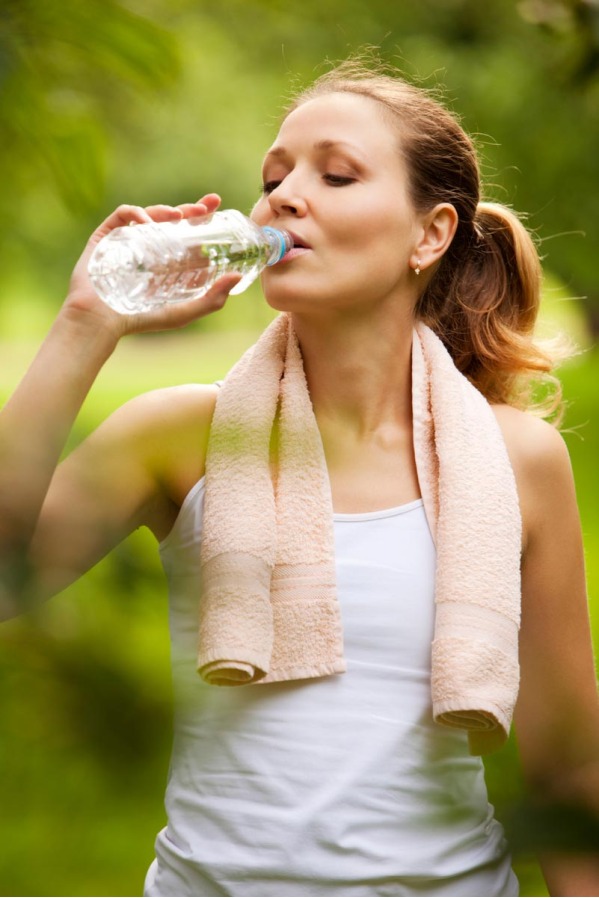
Imagine there was a time when bottled water didn't exist in our catalog of popular commodities. Perhaps the trend started in 1976 when the chic French sparkling water, Perrier made its introduction. There it was seductively bottled in its emerald green glass amongst the era of disco and the spectacle of excesses . . . who could resist right?!
What could be more decadent than to package, sell and consume what most consider (in the western world) a common human right easily supplied through a home faucet! It wasn't until the 1990s when bottled H2O became an everyday common sight and a symbol of our cultural desire towards fitness and "health-consciousness". Even today health enthusiasts claim drinking water often helps to "detox and boost the metabolism!"
There have been controversies about chemicals leeching into the water from the soft plastic material of bottles, but the FDA determined the containers "do not pose a health risk to consumers." IBISWorld reports that the "U.S. is the largest consumer for bottled water in the world, followed by Mexico, China, and Brazil".

Since
many people are alone when they suffer a heart attack, without help,the
person whose heart is beating improperly and who begins to feel faint,
has only about 10 seconds left before losing consciousness.
However,these victims can help themselves by coughing repeatedly and very vigorously. A deep breath should be taken before each cough, and the cough must be deep and prolonged, as when producing sputum from deep inside the chest.
A breath and a cough must be repeated about every two seconds without let-up until help arrives, or until the heart is felt to be beating normally again.
Deep breaths get oxygen into the lungs and coughing movements squeeze the heart and keep the blood circulating. The squeezing pressure on the heart also helps it regain normal rhythm. In this way, heart attack victims can get to a hospital. Tell as many other people as possible about this. It could save their lives!!
A cardiologist says If everyone who sees this post shares it to 10 people, you can bet that we'll save at least one life..
Rather than sharing jokes only please contribute by forwarding this info which can save a person's life.
Recent Comments